Your Tasmanian devil face cancer images are available in this site. Tasmanian devil face cancer are a topic that is being searched for and liked by netizens today. You can Download the Tasmanian devil face cancer files here. Get all free vectors.
If you’re searching for tasmanian devil face cancer images information connected with to the tasmanian devil face cancer keyword, you have come to the ideal site. Our website frequently gives you hints for refferencing the maximum quality video and picture content, please kindly hunt and find more informative video articles and images that fit your interests.
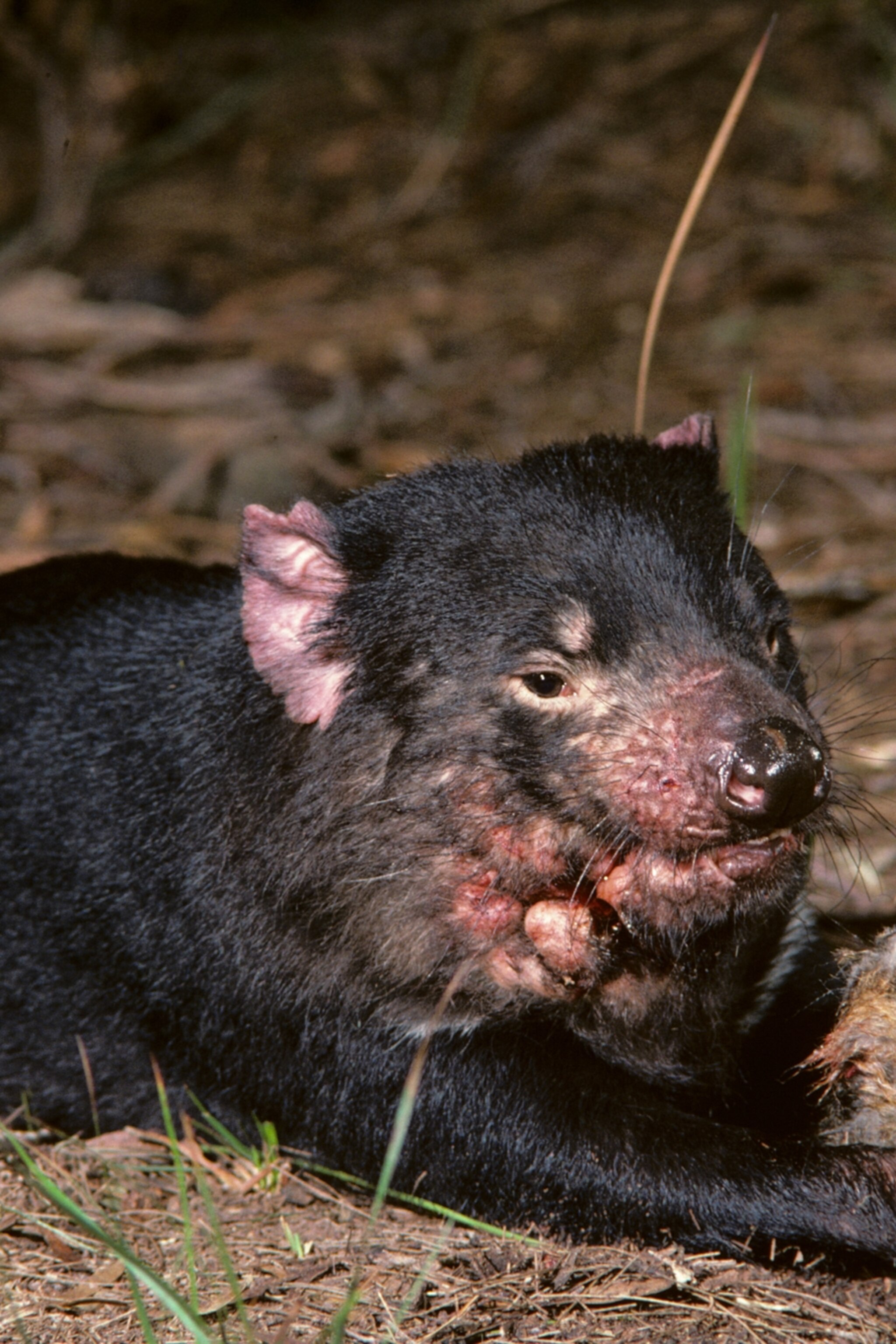
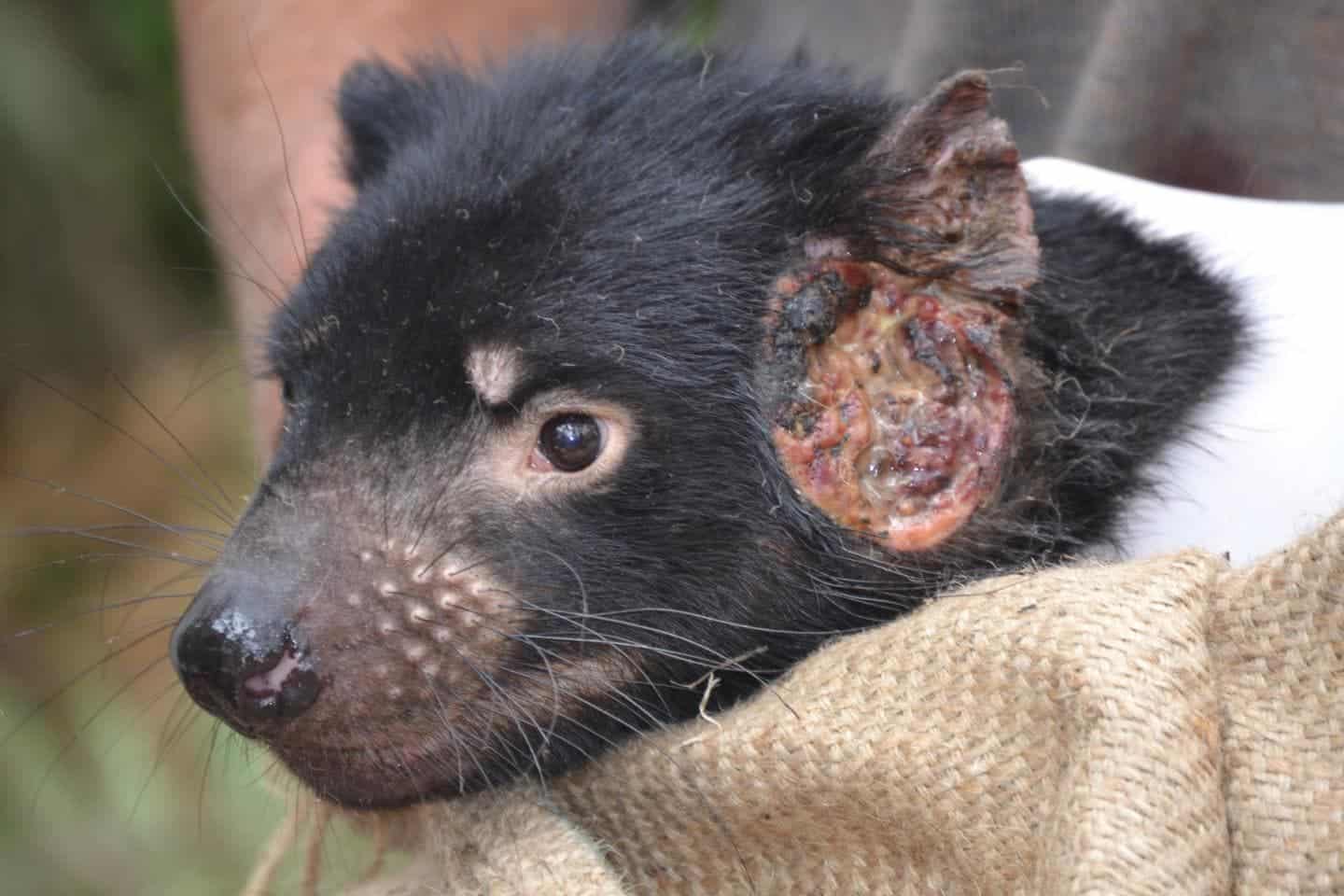
Tasmanian Devil Face Cancer. The cancer is highly infectious and lethal and the Tasmanian devil population has dropped. These develop into large tumours around the face and neck and sometimes even in other parts of the body. The tumours are first noticed in and around the mouth as small lesions or lumps. These tumours become larger and eventually cause death.
 Ahhh Cute Little Guy Endangered Tasmanian Devils Which Could Become Extinct Like Tasmanian Tigers Tier Fotos Tiere Tierbilder From pinterest.com
With a deadly highly contagious face cancer tearing through devil populations forecasts over the past decade or so spelled imminent doom for. For the Tasmanian devil this nightmare is part of their everyday reality. Tasmanian devils are adapting to their gnarly face cancer New 8 comments Rapid evolution may give Tasmanian devils a stay of execution against their contagious facial cancer. It is a transmissible cancer that is spread through biting. But for the past three decades Tasmanian devils have been suffering from their own pandemica gruesome facial cancer that spreads through biting. Devil Facial Tumour Disease DFTD is a term used to describe a fatal condition in Tasmanian devils which is characterised by the appearance of obvious facial cancers.
About two feet long they weigh up to 26 pounds and live about five years if theyre.
Tasmanian devils have developed a natural immune response to the deadly facial tumour disease confirming research that suggested the animals were rapidly evolving in response to the overwhelming. Scientists hypothesize that when the devils fight and bite one another cancer cells are transferred from one animal to the next and the lack of MHC. Getty Images Theres fresh hope for the survival of endangered Tasmanian devils after large numbers were killed off by facial tumours. Unlike typical cancers tumor cells from transmissible cancers are directly transferred from one. The Australian marsupials tumors cause cavernous. Devil facial tumor disease or DFTD is a transmissible cancer that Tasmanian devils spread through bites.
 Source: nationalgeographic.com
Tasmanian Devils often bite each other when fighting for food and mates. The disease is called Devil Facial Tumour Disease DFTD. Tasmanian devils were supposed to be extinct by now. The Tasmanian devil Sarcophilus harrisii referred to as the devil hereinafter the worlds largest living carnivorous marsupial is currently at risk of. Scientists hypothesize that when the devils fight and bite one another cancer cells are transferred from one animal to the next and the lack of MHC.
 Source: pinterest.com
The disease is called Devil Facial Tumour Disease DFTD. As it turns out the devils cancer cells have lost this MHC. Getty Images Theres fresh hope for the survival of endangered Tasmanian devils after large numbers were killed off by facial tumours. As a result their immune systems are unable to recognize the cancer cells as foreign and dangerous. Tasmanian devil fights back against face cancer.
 Source: eurekalert.org
Devil facial tumor disease likely began in what are called Schwann cells. Its only one of three. Tasmanian devils suffer from a transmissible cancer called devil facial tumor disease DFTD. The worlds largest carnivorous marsupials have been battling. The disease is almost 100 fatal.
 Source: zmescience.com
About two feet long they weigh up to 26 pounds and live about five years if theyre. A healthy Tasmanian devil looks over at the camera. Tasmanian devils are adapting to their gnarly face cancer New 8 comments Rapid evolution may give Tasmanian devils a stay of execution against their contagious facial cancer. Devil Facial Tumour Disease DFTD is a term used to describe a fatal condition in Tasmanian devils which is characterised by the appearance of obvious facial cancers. The Face of a Cancer Crisis 7 min with Gregory Hannon Description Transcript A bizarre facial tumor has decimated the Tasmanian devil population in recent years.
 Source: pinterest.com
The tumours are first noticed in and around the mouth as small lesions or lumps. Tasmanian devils are incredibly aggressive and they often fight by biting one another to establish dominance. 67m members in the WTF community. Tasmanian Devils often bite each other when fighting for food and mates. Schwann cells are found in the peripheral nervous system.
 Source: pinterest.com
Tasmanian devils have been devastated by a bizarre transmissible cancer. Getty Images Theres fresh hope for the survival of endangered Tasmanian devils after large numbers were killed off by facial tumours. The cancer is highly infectious and lethal and the Tasmanian devil population has dropped. The worlds largest carnivorous marsupials have been battling. 67m members in the WTF community.
Source: pinterest.com
101 votes 19 comments. Devil Facial Tumour Disease DFTD is a term used to describe a fatal condition in Tasmanian devils which is characterised by the appearance of obvious facial cancers. As a result their immune systems are unable to recognize the cancer cells as foreign and dangerous. Its only one of three. Devils almost always die within six to nine months.
 Source: pinterest.com
But for the past three decades Tasmanian devils have been suffering from their own pandemica gruesome facial cancer that spreads through biting. The cancer is highly infectious and lethal and the Tasmanian devil population has dropped. Theyre biting hard enough to draw blood and often some flesh along with it and. Tasmanian devil fights back against face cancer. Unlike typical cancers tumor cells from transmissible cancers are directly transferred from one.
 Source: pinterest.com
Tasmanian devils are adapting to their gnarly face cancer New 8 comments Rapid evolution may give Tasmanian devils a stay of execution against their contagious facial cancer. As a result their immune systems are unable to recognize the cancer cells as foreign and dangerous. Tasmanian devils have developed a natural immune response to the deadly facial tumour disease confirming research that suggested the animals were rapidly evolving in response to the overwhelming. Scientists hypothesize that when the devils fight and bite one another cancer cells are transferred from one animal to the next and the lack of MHC. Devil facial tumour disease or DFTD for short was first detected in 1996 in northeast Tasmania.
 Source: pinterest.com
So how does this relate to the Tasmanian devils facial cancer. 67m members in the WTF community. Tasmanian devils are aggressive carnivorous marsupials. Transmitted via biting DFTD has spread over almost the entire state reaching the west coast in the past two or three years. Devil facial tumor disease or DFTD is a transmissible cancer that Tasmanian devils spread through bites.
 Source: pinterest.com
With a deadly highly contagious face cancer tearing through devil populations forecasts over the past decade or so spelled imminent doom for. But for the past three decades Tasmanian devils have been suffering from their own pandemica gruesome facial cancer that spreads through biting. So how does this relate to the Tasmanian devils facial cancer. As it turns out the devils cancer cells have lost this MHC. The disease is called Devil Facial Tumour Disease DFTD.
 Source: pinterest.com
The worlds largest carnivorous marsupials have been battling. About two feet long they weigh up to 26 pounds and live about five years if theyre. Devil facial tumor disease likely began in what are called Schwann cells. The disease is almost 100 fatal. The Australian marsupials tumors cause cavernous.
 Source: pinterest.com
Unlike typical cancers tumor cells from transmissible cancers are directly transferred from one. The cancer is highly infectious and lethal and the Tasmanian devil population has dropped. Researchers recently found that since then devil facial tumor. But for the past three decades Tasmanian devils have been suffering from their own pandemica gruesome facial cancer that spreads through biting. Things that make you say What the Fck.
 Source: pinterest.com
Getty Images Theres fresh hope for the survival of endangered Tasmanian devils after large numbers were killed off by facial tumours. The cancer is highly infectious and lethal and the Tasmanian devil population has dropped. These develop into large tumours around the face and neck and sometimes even in other parts of the body. Tasmanian devil fights back against face cancer. They produce myelin and other proteins essential for the functions of nerve cells.
 Source: pinterest.com
Tasmanian devils are adapting to their gnarly face cancer New 8 comments Rapid evolution may give Tasmanian devils a stay of execution against their contagious facial cancer. So how does this relate to the Tasmanian devils facial cancer. Scientists hypothesize that when the devils fight and bite one another cancer cells are transferred from one animal to the next and the lack of MHC. It is a transmissible cancer that is spread through biting. Its only one of three.
This site is an open community for users to do submittion their favorite wallpapers on the internet, all images or pictures in this website are for personal wallpaper use only, it is stricly prohibited to use this wallpaper for commercial purposes, if you are the author and find this image is shared without your permission, please kindly raise a DMCA report to Us.
If you find this site serviceableness, please support us by sharing this posts to your preference social media accounts like Facebook, Instagram and so on or you can also bookmark this blog page with the title tasmanian devil face cancer by using Ctrl + D for devices a laptop with a Windows operating system or Command + D for laptops with an Apple operating system. If you use a smartphone, you can also use the drawer menu of the browser you are using. Whether it’s a Windows, Mac, iOS or Android operating system, you will still be able to bookmark this website.


